Your air conditioner and a dehumidifier both pull water out of the air, but they do it for different reasons, and in a Southeast Florida home, that difference is what decides whether your living room feels crisp or clammy. An air conditioner removes humidity only as a byproduct of cooling, so on a mild, muggy wet-season afternoon it may not run long enough to dry the air. A dedicated dehumidifier targets moisture directly, holding a set humidity level regardless of temperature. For most homes here the AC carries the bulk of the load and a dehumidifier fills the gap the AC leaves behind. This is the dehumidifier vs air conditioner humidity question nearly every homeowner in Southeast Florida eventually runs into, especially in early summer, and the comparison below shows exactly where each one wins.

Key takeaways
- An air conditioner dries the air only while it runs cold; a dehumidifier dries it on demand at any temperature.
- Homes feel humid with the AC on because of oversized or short-cycling systems, thermostat-only control, and wet-season fresh-air infiltration.
- The EPA recommends keeping indoor relative humidity below 60 percent, ideally 30 to 50 percent, to limit mold; most coastal homes aim for 45 to 55 percent.
- For a Southeast Florida home, the AC is the foundation and a dehumidifier is the backstop; many homes do best with both.
- Refrigerant, electrical, and ductwork work is professional-only, call a licensed HVAC contractor rather than attempting it yourself.
Why your home can feel humid even with the AC on
Your home can feel humid with the AC running because an air conditioner only removes moisture while it is actively cooling, and three common problems cut that moisture-removal time short. "Relative humidity" (the amount of water in the air compared with the most it could hold at that temperature) climbs fast in Southeast Florida, and a quick cooling cycle does not always keep up.
An oversized or short-cycling system. A unit that is too large for the home cools the air to the setpoint in just a few minutes, then shuts off, a pattern called short-cycling. The coil never stays cold long enough to wring much water out, so you get cool, damp air instead of cool, dry air. This is the single most common reason a new or recently replaced system still feels muggy.
Thermostat-only control. A standard thermostat measures temperature, not moisture. Once the room hits 74°F it stops the system, even if the air is still sitting at 65 percent humidity. Without a "humidistat" (a control that measures relative humidity and can keep the system running to dry the air), the AC has no reason to keep dehumidifying once the temperature target is met.
Wet-season fresh-air infiltration. The South Florida wet season runs from May 15 to October 15 and delivers roughly 60 to 70 percent of the region's annual rainfall, according to the National Weather Service in Miami (2025). During those months, every time a door opens, every leaky window frame, and every gap around ductwork lets warm, saturated outdoor air pour in faster than a short cooling cycle can remove it. Salt air along the coast adds corrosion that slowly drags down coil efficiency, so an older coastal system removes less moisture each season.
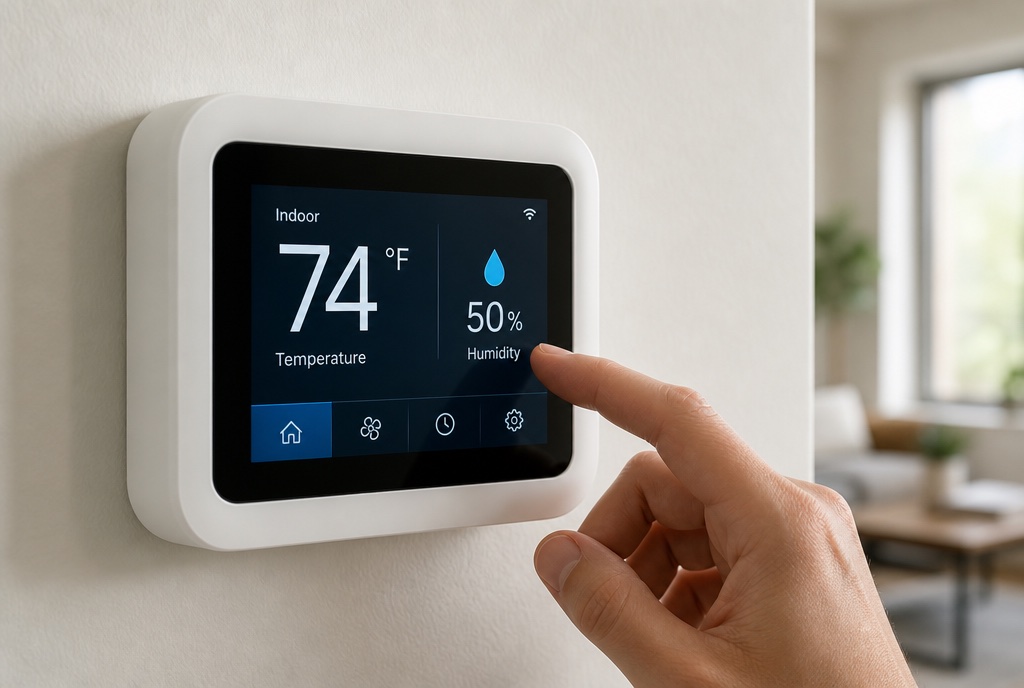
If your AC runs constantly and the house still feels damp, the problem may be airflow, refrigerant charge, or a failing component, all of which are professional diagnostics. A pre-summer AC maintenance and tune-up checks the coil, blower, and condensate drainage that directly affect how much moisture your system pulls out.
How an air conditioner removes humidity, and where it stops
An air conditioner removes humidity by passing warm indoor air over a cold evaporator coil, where water vapor condenses into liquid and drains away, the same way a cold glass sweats on a summer day. As long as the coil is cold and air is moving across it, the system is steadily dehumidifying. That is why a correctly sized AC running through a hot afternoon usually leaves a Florida home feeling comfortable.
The limit is built into how an AC decides when to run: it runs on temperature. The moment the thermostat is satisfied, the compressor stops and dehumidification stops with it. On a mild, rainy wet-season day, say 82°F outside but soaking humid, the house may only need a few minutes of cooling to hit the setpoint, far less than it needs to dry out. That gap between "cool enough" and "dry enough" is the core weakness of relying on the AC alone.
Two design features narrow that gap. A variable-speed blower lets the system run longer at low speed, keeping the coil cold and stripping out more moisture without overcooling (our single-stage vs. variable-speed AC comparison covers that difference in detail). A modern, efficient system rated under SEER2, the federal efficiency standard that replaced SEER in January 2023 with test conditions that better match real operation, per the U.S. Department of Energy, tends to manage humidity more gracefully than a single-stage builder unit from 15 years ago. But even the best AC still stops drying the air the instant it stops cooling. When the AC simply is not keeping up and the air feels wet, that is also a signal to book AC repair before a small charge or airflow problem becomes a comfort and mold problem.
What a dedicated dehumidifier does differently
A dedicated dehumidifier removes moisture on its own schedule, independent of cooling, so it can dry the air even when the AC has no reason to run. It uses its own coil and compressor to condense water out of the air, then either drains it or collects it in a reservoir, and it keeps going until the air hits the humidity target you set, not a temperature target.
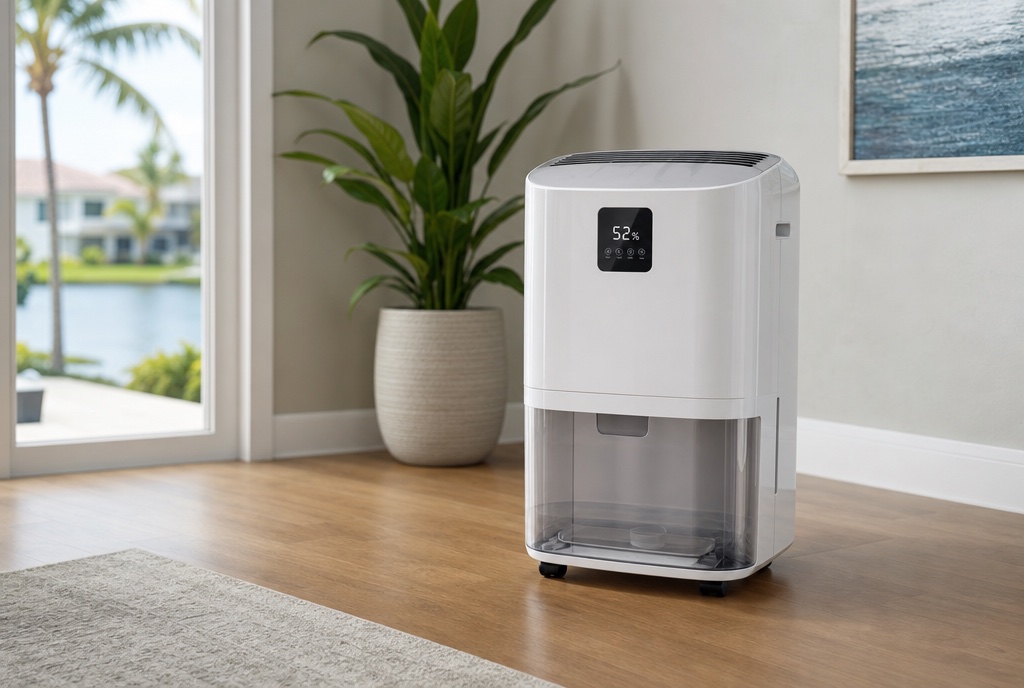
There are two types, and the difference matters for a humid coastal home:
Portable dehumidifiers sit in a single room, plug into a standard outlet, and collect water in a reservoir you empty (or route to a drain). They are well suited to one problem zone, a damp bedroom, a closet, a garage-converted office, but they cannot dry a whole house and they need regular emptying and cleaning.
Whole house dehumidifiers tie into your existing ductwork and treat every conditioned room, holding the entire home at a set humidity. In a climate with daily summer humidity, a whole house dehumidifier in Florida is the version that actually moves the needle, because it covers the whole envelope and runs only when humidity, not temperature, calls for it. Installing one into the ductwork involves electrical connections and sealed components, so it is a professional-only job; this is not a weekend DIY project. A licensed HVAC contractor sizes the unit to the home and integrates it with the air handler so the two systems work together instead of fighting each other.
Dehumidifier vs AC: which controls humidity better for a Southeast Florida home, and when you need both
For a Southeast Florida home, the air conditioner is the better everyday humidity tool during peak heat, and a dehumidifier is the better tool for the mild, muggy hours the AC skips, which is why many homes ultimately want both. The honest answer to dehumidifier vs air conditioner humidity control is that they are not really competitors; they cover different parts of the same problem. Here is how they compare on what matters, never on price:
| What matters | Air conditioner | Dedicated dehumidifier |
|---|---|---|
| How it removes moisture | Byproduct of cooling; only while running cold | Directly, on a humidity target, any temperature |
| Comfort on mild muggy days | Weak, may not run long enough to dry air | Strong, runs on moisture, not heat |
| Mold & air-quality protection | Good during heavy cooling; gaps otherwise | Steady control toward a set humidity level |
| Fit for a humid coastal climate | Essential foundation for cooling + drying | Excellent backstop for wet-season humidity |
| Runtime & wear | Overcooling to dry air adds wear | Lets the AC run less to chase humidity |
| Maintenance | Filter, coil, drain line, pro tune-ups | Empty/clean reservoir or check drain; filter |
When the AC alone is enough: a correctly sized, well-maintained system, ideally with a variable-speed blower and a humidistat, keeps many Southeast Florida homes comfortable through most of the year without separate equipment.
When you need both: add a dehumidifier when the air still feels damp on mild wet-season days, when an oversized system short-cycles, when you keep a tight thermostat setpoint and humidity stays high anyway, or when a sensitive household (allergies, asthma, a history of mold) needs tighter, steadier control than cooling alone provides. Pairing the two also lets you set the thermostat a little warmer for comfort, since dry air at 76°F feels better than damp air at 72°F.
The mold and comfort stakes, and the target humidity range
High indoor humidity is a comfort problem and a health problem, which is why the target range matters. The U.S. Environmental Protection Agency recommends keeping indoor relative humidity below 60 percent, and ideally between 30 and 50 percent, to limit mold growth and dust mites. Sustained levels above roughly 60 percent give mold the moisture it needs to grow on walls, ceilings, fabrics, and inside ductwork. In a humid coastal climate, most homes land best in the 45 to 55 percent sweet spot, dry enough to discourage mold, not so dry that the air feels harsh.
Beyond mold, damp air feels warmer than it is, so people push the thermostat down and the system runs harder than it needs to. Controlling humidity is often the difference between a house that feels fresh at 76°F and one that feels sticky at 72°F. If you already suspect moisture has reached your ducts, our guide to getting rid of mold in air ducts walks through the steps, and why cleaning alone rarely fixes a humidity-driven problem. We never promise a specific humidity reading or guarantee a home will stay mold-free, but holding the right range is the most effective thing you can do.
Safe upkeep you can do, and what to leave to a pro
You can safely handle a short list of light maintenance that supports humidity control: change the AC air filter every 30 to 45 days, set the blower fan to AUTO (never ON, which re-humidifies the house), set a humidistat target near 50 percent, and empty and wipe out a portable dehumidifier's reservoir so it does not grow mold. Unplug a portable unit before cleaning it, and when in doubt, call a professional.
Everything else is professional-only. Anything involving refrigerant, sealed or internal HVAC parts, electrical connections, or installing a whole house dehumidifier into the ductwork should be handled by a licensed HVAC contractor, both for safety and because it is illegal to handle refrigerant without certification. Adjusting the thermostat or upgrading to a smart thermostat with humidity control is one of the few moisture-related upgrades you can start on your own.
Which is right for you
If your home is comfortable most of the year and only feels muggy on a handful of rainy days, start with the AC: get a tune-up, confirm the system is correctly sized, and add a humidistat or variable-speed blower before buying separate equipment. If the air feels damp even when the AC is keeping up, or if you are managing allergies, asthma, or a past mold issue, a whole house dehumidifier working alongside the AC is usually the right call. The only way to know for certain is to measure your actual indoor humidity and how your system behaves through a wet-season day.
Florida Breeze HVAC is a licensed HVAC company based in Sunrise, serving Miami-Dade, Broward, and Palm Beach counties across Southeast Florida. We specialize in air conditioning repair, maintenance, replacement, and indoor humidity control for the region's hot, humid, salt-air climate. If your home feels clammy even with the AC running, schedule a comfort and humidity assessment, we will measure your indoor humidity, check how your system handles moisture, and give you a written, itemized estimate before any work begins.
FAQ
Why is my house humid with the AC on?
An air conditioner removes moisture only while it is actively running cold. If the system is oversized or short-cycling, it cools the house and shuts off before pulling much water out, leaving cool, damp air. Thermostat-only control and wet-season fresh-air infiltration add moisture faster than a short cooling cycle can remove it.
What indoor humidity level should a Southeast Florida home keep?
The EPA recommends keeping indoor relative humidity below 60 percent, ideally 30 to 50 percent, to limit mold and dust mites. In a humid coastal climate, most homes feel best and stay safest in the 45 to 55 percent range.
Do I need a whole house dehumidifier in Florida if I already have AC?
Not always. Many Southeast Florida homes stay comfortable on a properly sized AC with a variable-speed blower and humidistat. A whole house dehumidifier earns its place when humidity stays high on mild days, when the AC short-cycles, or when the air still feels damp at a tight setpoint. A licensed HVAC professional can measure your humidity and tell you which you need.
Can high indoor humidity cause mold in a Southeast Florida home?
Sustained indoor relative humidity above roughly 60 percent creates conditions where mold can grow on walls, ceilings, fabrics, and inside ductwork, according to the EPA. Keeping humidity in the 45 to 55 percent range is the most effective way to make a home less hospitable to mold, though no equipment can guarantee mold will never form.
$0 Down Financing
No credit needed. Everyone approved.
Start the work now and pay over time.
954-687-8624Related Articles
Explore Our HVAC Services
Serving Miami, Broward, and Palm Beach, ask about our $0 down financing, no credit needed, everyone approved.
Need HVAC Service?
Florida Breeze HVAC serves Miami, Broward, and Palm Beach with fast, professional service.