The short answer: yes — significantly. In Florida's climate, a properly insulated attic can reduce cooling costs by 10–50%, keep your home's temperature more consistent, and take real strain off your AC system. But the type of insulation you choose and where you install it matters more here than almost anywhere else in the country. This guide breaks it all down for Florida homeowners.
Does Attic Insulation Actually Help in Summer?
If you've ever stepped into an un-insulated Florida attic in July, you already know the answer. Attic temperatures in the Sunshine State regularly hit 130–160°F on hot days — and without adequate insulation, that heat radiates directly down into your living space. Your air conditioner has to work constantly just to fight what's coming through the ceiling.
So does attic insulation help in the summer? Absolutely. Insulation acts as a thermal barrier, slowing the transfer of that superheated attic air into your home. The result is a cooler living space, a less overworked AC unit, and noticeably lower energy bills.
According to the U.S. Department of Energy, proper attic insulation can cut heating and cooling costs by 10–50% depending on your home's existing envelope. In a state where cooling accounts for the vast majority of annual energy use, that's a significant return on investment.
Florida stat: Florida homeowners spend an average of $1,500–$2,500 per year on electricity, with air conditioning making up roughly 40–60% of that bill. A well-insulated attic is one of the highest-ROI upgrades you can make.
Why Florida's Climate Makes Attic Insulation Even More Important
Most insulation guides are written with northern climates in mind — states where keeping heat in during winter is the primary concern. Florida is almost entirely the opposite. Your insulation needs to be optimized to keep heat out from late spring through early fall, and to manage moisture year-round.
Here's what makes Florida different:
- Heat load is extreme. Florida's solar irradiance is among the highest in the nation. Roof surfaces absorb enormous amounts of radiant energy throughout the day, and that heat works its way into the attic before trying to radiate downward.
- Humidity is relentless. High relative humidity means moisture management is as important as thermal performance. Some insulation materials that work well in dry climates can trap moisture in Florida's conditions, leading to mold growth and structural damage.
- Cooling season is long. While northern states might run AC for three to four months, Florida homeowners typically run it for seven to nine. The energy savings from good attic insulation compound over a much longer operating season.
- AC systems work harder. When attic heat bleeds into conditioned space, your AC cycles more frequently and runs longer. Over time, this accelerates wear on your system. Good insulation directly extends the life of your HVAC equipment.
If you're in the Tampa Bay, Orlando, or South Florida areas, the Florida Building Code currently requires a minimum of R-30 in ceilings for new construction. However, most energy experts recommend R-38 to R-60 for existing Florida homes to achieve meaningful comfort and savings.

Should You Insulate the Attic Floor or the Attic Ceiling (Roof Deck)?
One of the most common questions Florida homeowners ask is: should I insulate my attic floor or ceiling? The answer depends on how your attic is used and how your home is configured. Both approaches have real merit, but they serve different purposes and create very different results.
Insulating the Attic Floor (Most Common Approach)
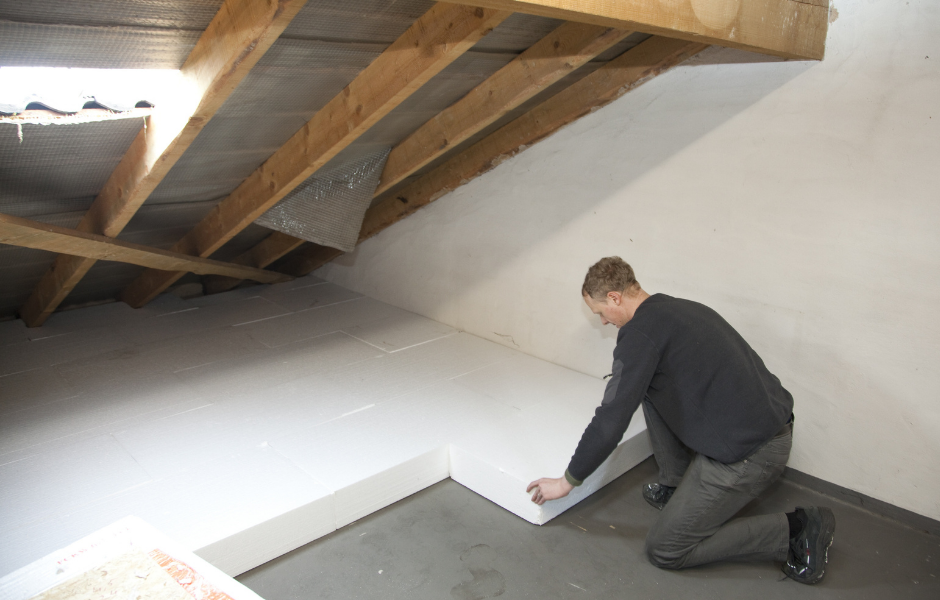
In a standard Florida home with a vented attic, insulating the attic floor — which is the ceiling of your living space below — is the most common and cost-effective strategy. The goal here is to create a thermal boundary between the conditioned space of your home and the hot, unconditioned attic above.
Key benefits of attic floor insulation:
- Lower installation cost compared to roof deck insulation
- Easier to add more insulation if R-values are insufficient
- Keeps the attic as an unconditioned buffer zone, which can be sufficient for most homes
- Compatible with standard blown-in fiberglass or cellulose products
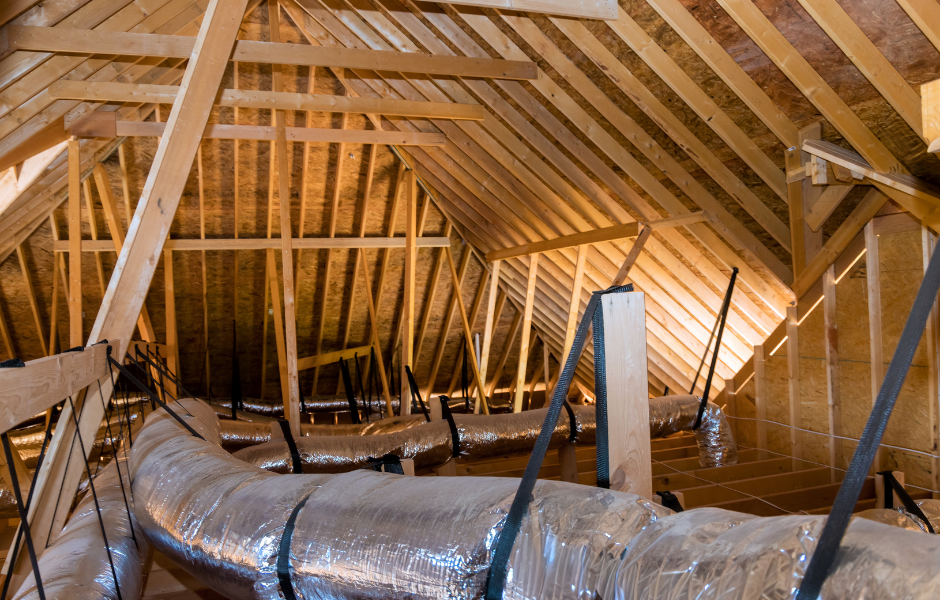
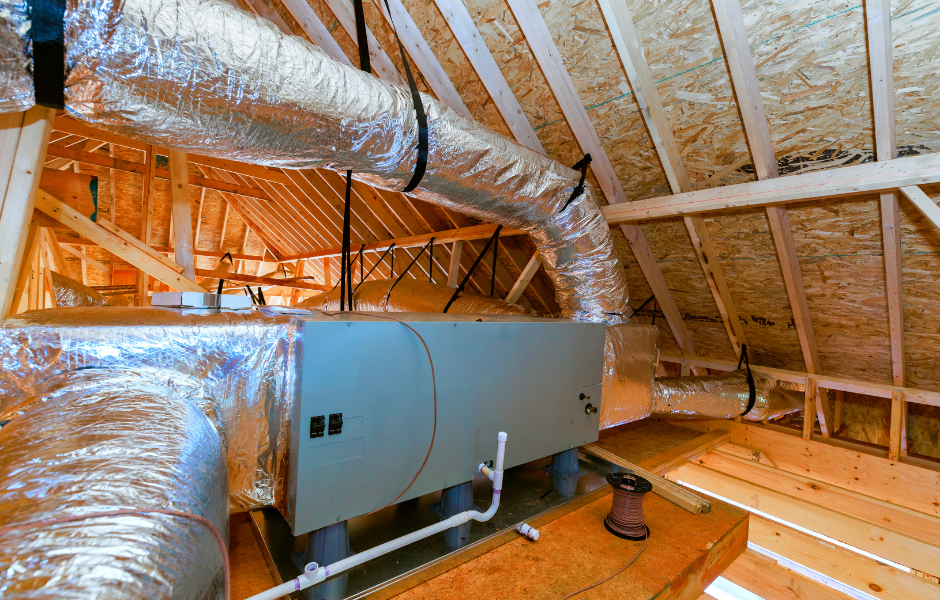
The limitation: your attic space itself will still be extremely hot. If you have ductwork running through the attic (which is common in Florida homes), those ducts sit in a 150°F environment even with perfect floor insulation below. This is a significant source of cooling loss that floor insulation alone won't fix.
Insulating the Attic Ceiling / Roof Deck (Conditioned Attic)
Insulating the roof deck — the underside of your roof's sheathing — effectively brings the entire attic into the conditioned envelope of the home. The attic itself becomes a semi-conditioned or fully conditioned space, dramatically reducing the temperature in the whole attic, not just at the floor.
This approach is particularly valuable when:
- You have HVAC equipment (air handler, ducts) located in the attic
- You want to use the attic as usable conditioned space
- Your roof is being replaced and you're considering a full upgrade
- You have significant air leakage between the attic and living space
Closed-cell spray foam applied directly to the roof deck is the gold standard for this application in Florida. It provides both high R-value per inch and acts as a vapor barrier — critical in humid climates. The Florida Solar Energy Center has published extensive research showing that conditioning the attic with spray foam can reduce duct system losses by up to 30%.
The hybrid approach: Many Florida homes benefit most from a combination strategy — air-sealing and insulating the attic floor to adequate R-values, while also insulating around the HVAC equipment area at the roof deck. Your insulation contractor can assess which configuration makes sense for your home's layout.

What Type of Insulation Is Best for a Florida Attic?
When it comes to what type of insulation for an attic makes the most sense in Florida, there is no single universal answer — but there are clear leaders for each situation. The key criteria for Florida are: thermal resistance (R-value), moisture resistance, air-sealing ability, and longevity in a hot, humid environment.
Attic Insulation Types: Florida Suitability Comparison
| Insulation Type | R-Value / inch | Best For | Florida Suitability |
|---|---|---|---|
| Blown-in fiberglass | R-2.2 to R-2.9 | Attic floors | Excellent — resists moisture |
| Blown-in cellulose | R-3.2 to R-3.8 | Attic floors | Good — watch humidity |
| Spray foam (open-cell) | R-3.5 to R-3.9 | Roof deck / walls | Good — air seals well |
| Spray foam (closed-cell) | R-6 to R-7 | Roof deck | Best — vapor barrier built-in |
| Rigid foam board | R-3.8 to R-6.5 | Roof deck / walls | Very good — moisture-resistant |
| Fiberglass batts | R-2.9 to R-3.8 | Framed cavities | Fair — gaps reduce performance |
Blown-In Fiberglass — Best All-Around for Attic Floors
For insulating the attic floor in a Florida home, blown-in fiberglass is the most widely recommended product by local contractors and energy auditors. It conforms to irregular spaces and framing, doesn't settle significantly over time, and is highly resistant to moisture and mold. It can be installed quickly and affordably, making it the go-to choice for upgrading existing attic insulation to R-38 or higher.
Closed-Cell Spray Foam — Best for Roof Decks and Conditioned Attics
If you're insulating the roof deck to create a conditioned attic, closed-cell spray foam is the preferred product in Florida's climate. It delivers the highest R-value per inch (R-6 to R-7), creates an impermeable vapor barrier, and adheres directly to roof sheathing without gaps or settling. It's significantly more expensive than blown-in products but provides performance that no other product matches in humid, hot climates.
Open-Cell Spray Foam — Good Air Sealer, Watch the Moisture
Open-cell spray foam is a popular choice for its excellent air-sealing properties and lower cost compared to closed-cell. However, it is vapor-permeable, which can be a drawback in South Florida's particularly humid conditions. In North and Central Florida it performs well, but in high-humidity coastal areas, closed-cell is generally preferred for roof deck applications.
Fiberglass Batts — Use with Caution
Fiberglass batts are the familiar pink or yellow rolls most people picture when they think of insulation. They work adequately in attic floors when installed without gaps, but in practice, gaps around wiring, framing irregularities, and recessed lights significantly reduce their effective R-value. In Florida's hot attics, any gap becomes a meaningful thermal bridge. If batts are already present, topping them with blown-in fiberglass is usually the most cost-effective improvement.
Don't Forget Air Sealing — It's as Important as the Insulation Itself
One of the most overlooked aspects of Florida attic performance is air sealing. Insulation resists the conduction of heat, but air leaks allow hot, humid attic air to flow directly into your conditioned space — no amount of insulation R-value compensates for significant air infiltration.
Common air leak points in Florida attic floors include:
- Recessed (can) light fixtures — a major source in homes built before 2010
- Plumbing and electrical penetrations through the top plate
- Gaps around HVAC supply and return boots
- The attic hatch or pull-down stair opening
- Gaps at interior wall top plates
Sealing these penetrations with caulk or expanding foam before adding insulation is a critical first step. ENERGY STAR's air sealing guide for attics walks through the process in detail. A Florida Breeze HVAC technician can identify your home's biggest air leak points during an energy assessment and prioritize them before insulation work begins.
How Much R-Value Does a Florida Attic Actually Need?
Florida falls within DOE Climate Zones 1 and 2 — the hottest zones in the continental United States. The Department of Energy's recommendations for these zones call for attic insulation between R-30 and R-60 for existing homes, with R-38 being the most commonly cited target for Florida.
Here's a practical guide for Florida homes:
- If you currently have less than R-11 (3–4 inches of fiberglass): adding insulation to R-38 will deliver the most dramatic comfort and energy improvement
- If you currently have R-11 to R-19: upgrading to R-38 remains highly cost-effective with typical payback periods of 3–5 years
- If you currently have R-19 to R-30: you'll see meaningful improvement from R-38 or higher, though returns diminish as you add more
- R-49 to R-60: worth considering for homes in South Florida with very high cooling loads, or if upgrading during a re-roofing project
R-value tip: R-value measures resistance to heat flow per inch of material. To achieve R-38 with blown-in fiberglass (R-2.5 per inch), you need approximately 15 inches of material. Make sure your attic floor has enough clearance depth before specifying a product.
Signs Your Attic Insulation Isn't Doing Its Job
Florida homeowners often don't realize their attic insulation is underperforming until they look at the energy bill. Here are the most common warning signs:
- High and climbing electricity bills: If your cooling costs are increasing year over year, inadequate or settling insulation may be a key contributor
- Uneven temperatures room to room: Top-floor rooms that are noticeably hotter than ground-floor rooms often point directly to attic insulation deficiencies
- AC running almost constantly: When your system can't maintain setpoint on hot days without running continuously, heat gain from the attic is a likely cause
- Visible old or thin insulation: If you can see the ceiling joists or the insulation is clearly thin and compressed, you almost certainly have less than the recommended R-value
- High humidity indoors: Unconditioned attic air leaking into living space carries significant moisture load with it
If you're experiencing any of these, an attic insulation assessment is a logical first step. Our team at Florida Breeze HVAC performs whole-home energy assessments that include attic inspection, R-value measurement, and personalized recommendations.
Rebates and Incentives Available to Florida Homeowners
Upgrading attic insulation in Florida often qualifies for financial incentives that significantly reduce the net cost of the project.
- The Inflation Reduction Act (IRA) provides a federal tax credit of 30% (up to $1,200 per year) for qualifying insulation improvements under the Energy Efficient Home Improvement Credit (25C)
- Duke Energy, FPL, TECO, and other Florida utilities offer insulation rebates ranging from $0.05 to $0.20 per square foot for upgrades that meet their R-value thresholds — check DSIRE Florida for current utility program listings
- ENERGY STAR® certified insulation products may qualify for additional rebates — ask your contractor to specify ENERGY STAR materials when available
A qualifying insulation upgrade that costs $1,500–$2,500 before incentives may effectively cost $800–$1,500 after federal tax credits and utility rebates. Combined with ongoing energy savings, payback periods in Florida are frequently under three years.
Frequently Asked Questions
Does attic insulation help with cooling as much as with heating?
In Florida's climate, attic insulation is arguably more impactful for cooling than for heating. The extreme solar heat gain through the roof during a Florida summer creates far more thermal load than any winter cold spell. The same insulation that keeps heat out in summer also keeps warm air in during the brief Florida winter.
How long does attic insulation last in Florida's climate?
Blown-in fiberglass installed correctly can last 80–100 years without significant degradation. Cellulose may require top-off additions after 15–20 years due to settling. Spray foam products are highly durable and do not settle. Humidity and pest activity are the primary causes of insulation degradation in Florida attics.
Should I insulate my attic floor or ceiling if I have ductwork in the attic?
If your HVAC ducts run through an unconditioned attic, insulating only the floor still leaves your ductwork in a 150°F environment, creating significant cooling loss. In this situation, bringing the attic into the conditioned envelope by insulating the roof deck (or at minimum ensuring ducts are properly sealed and insulated to at least R-8) will yield better results than floor insulation alone.
Can I add insulation on top of existing insulation?
Yes, in most cases. If your existing insulation is dry, not moldy, and not a vermiculite product (which may contain asbestos), blown-in fiberglass can be added over the top of existing batts or prior blown-in material. Your contractor should check the existing material and air-seal key penetrations before adding new insulation.
How do I know what type of insulation is already in my attic?
A visual inspection usually tells the story: pink or yellow fluffy material is fiberglass batts; loose gray or white material is blown-in fiberglass or cellulose; and a rigid foam-like coating on the roof deck is spray foam. If you're unsure, a free attic assessment from a local HVAC professional will give you a clear picture of what you have and what you need.
Ready to Stop Losing Cool Air Through Your Attic?
The Florida Breeze HVAC team serves homeowners throughout the Tampa Bay area with attic insulation assessments, blown-in fiberglass and spray foam installation, and whole-home energy efficiency upgrades. We'll inspect your attic, measure your current R-value, identify air leaks, and give you an honest recommendation — no pressure.
Call us at 954-687-8624 or request a free energy assessment online. We serve Miami-Dade, Broward, and Palm Beach County.
Need HVAC Service?
Florida Breeze HVAC serves Miami, Broward, and Palm Beach with fast, professional service.