Yes. The federal tax credit that helped pay for attic insulation ended for any project placed in service after December 31, 2025. So attic insulation installed in 2026 no longer qualifies for the federal attic insulation tax credit, according to the Internal Revenue Service (IRS). That credit had covered 30 percent of qualifying insulation materials, up to $1,200 a year. It is gone at the federal level, but insulation still pays for itself in South Florida through lower cooling bills, and a few local savings paths may still apply.
This post is about the tax change and what it means for your 2026 decision, not a price breakdown. For real numbers, see our attic insulation cost guide. Here we answer one question: with the federal credit gone, does insulating your attic in 2026 still make sense?
Not tax advice. This is general information for homeowners. Confirm your own eligibility for any credit or rebate with a tax professional and the IRS, and verify any specific rebate offer before you count on it.
Key takeaways
- The federal 25C Energy Efficient Home Improvement Credit ended for property placed in service after December 31, 2025, per the IRS.
- Attic insulation installed in 2026 does not qualify for that federal credit, whatever the materials cost.
- This is enacted law, not a proposal. It came from the One Big Beautiful Bill Act (Public Law 119-21), signed July 4, 2025.
- Insulation is still worth it on energy savings alone. A well-insulated Southeast Florida attic commonly cuts cooling costs.
- Some local utility or state rebates may still exist. Check current offers before you plan around them, and confirm tax questions with a tax professional and the IRS.
What changed with the attic insulation tax credit in 2026
The federal 25C Energy Efficient Home Improvement Credit ended for any qualifying property placed in service after December 31, 2025, according to the IRS. In plain terms: if your new attic insulation was finished and in use on or before that date, it could still qualify. If the work happened in 2026, it does not qualify for the federal credit.
The end of the 25C credit is settled law, not a proposal that might change. The change came from the One Big Beautiful Bill Act (Public Law 119-21), which was signed on July 4, 2025. The IRS guidance on the law states the credit "will not be allowed for any property placed in service after December 31, 2025." The key phrase there is "placed in service," which means the work has to be installed and in use, not just paid for or under contract.
What the 25C credit used to be worth
Before it ended, the 25C credit paid back 30 percent of the cost of qualifying insulation and air sealing materials, up to an annual cap, according to the IRS. A few details mattered:
- It covered materials only, not the labor to install them.
- The insulation or air sealing had to meet the standards in the International Energy Conservation Code (IECC) in effect at the time.
- The $1,200 annual cap was shared across several improvements in the same category, so insulation was not the only thing competing for it.
For a typical South Florida attic job, the credit might have knocked a few hundred dollars off the material cost. Helpful, but it was never the main reason the project made sense. The bigger return has always come from the energy savings.
Is attic insulation still worth it in 2026 on energy savings alone?
Yes. Even without the federal credit, a properly insulated attic still lowers your cooling bills, and in South Florida that is where the real payback lives. Attics here regularly hit 130 degrees or more on a summer afternoon, and that heat pushes straight down into your rooms. Good insulation slows it, so your air conditioner runs less and lasts longer.
We are not going to repeat the whole case here. If you want the details, our post on why attic insulation lowers cooling costs in Florida and our guide to whether attic insulation helps in summer both walk through the savings and the insulation types. For the money side and payback math, the 2026 pricing guide lays out what most homeowners actually pay.
The short version: the tax credit was a discount on the front end. The energy savings are the return that keeps coming every month, and losing the credit did nothing to change that.
What savings paths remain after the credit expired
With the federal 25C credit gone, two things are worth checking before you write off any help with the cost.
Local utility or state rebates
Some electric utilities and state or county programs offer their own rebates for insulation and efficiency upgrades, and these are separate from the federal tax credit that expired. These programs change often, and some run out of funding partway through the year, so treat anything you read online as a starting point, not a promise. Check directly with your electric utility and your local government for what is actually open right now, and get the current terms in writing.
A properly sized, efficient system
The other savings path has nothing to do with rebates. A right-sized air conditioner paired with a well-sealed, well-insulated attic simply uses less power. An oversized or worn system short-cycles and runs up your bill no matter how good the insulation is. If your energy costs are climbing, our post on why your South Florida AC bill is higher this summer covers the fixes that move the needle most.
Whatever path you take, get a written, itemized quote before any work starts. Any dollar figure in this article is a general estimate that varies by home, attic size, material, and market. It is not a quote.
How to plan an attic insulation project now
With the tax credit out of the picture, plan the project around the work itself and the energy payback. Here is a sensible order.
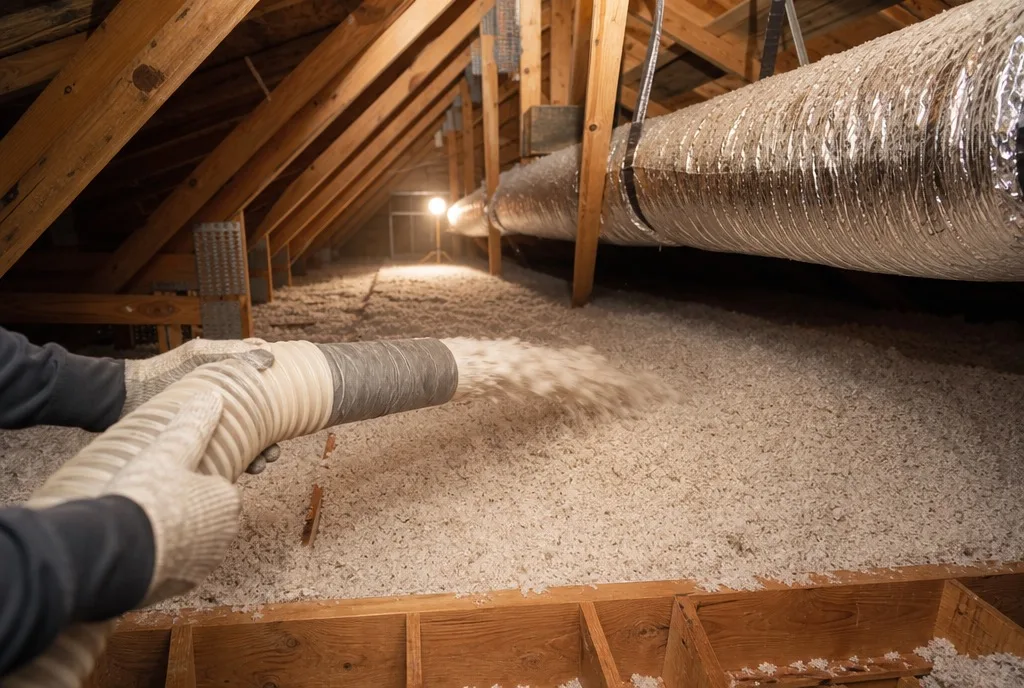
- Get the attic inspected. A pro should look at what is already up there, check for moisture, rodent activity, or compressed old insulation, and measure the current R-value.
- Know your target R-value. The U.S. Department of Energy places most of Florida in climate Zone 2, which calls for roughly R-38 to R-60 in the attic. Many older South Florida homes sit far below that.
- Remove old insulation if it is contaminated. Adding new insulation on top of moldy or rodent-soiled material just traps the problem.
- Seal air leaks first. Sealing gaps around can lights, wiring, and the attic hatch before insulating makes the insulation actually work.
- Ask about current rebates. A local contractor often knows which utility or state programs are open this month.
- Get it in writing. An itemized quote that lists material, R-value, removal, and labor protects you from surprises.
One safety note: attic insulation is a professional install. Blown-in fiberglass and spray foam involve equipment, respiratory protection, and long stretches of work in extreme attic heat. Not sure which material fits your home? Our comparison of blown-in vs spray foam attic insulation breaks down cost and performance. Light upkeep like keeping the attic hatch closed and sealed is fine to handle yourself, but the install itself is a job for a licensed crew. When in doubt, hire a professional.
Before and after: the 25C credit at a glance
| Through Dec. 31, 2025 | 2026 and after | |
|---|---|---|
| Federal 25C credit | Available | Ended (IRS) |
| Credit amount | 30% of qualifying materials, up to $1,200/year | None federally |
| What still applies | Energy savings, possible rebates | Energy savings, possible rebates |
| Main reason to insulate | Lower cooling bills | Lower cooling bills |
Florida Breeze HVAC is a licensed heating and cooling company, and attic insulation is one of the things we do every day. We serve homeowners across Southeast Florida, including Miami-Dade, Broward, and Palm Beach. On an insulation job we inspect what is in your attic, tell you what you actually need, and put the numbers in writing before any work begins.
Frequently Asked Questions
Did the attic insulation tax credit end?
Yes. The federal 25C Energy Efficient Home Improvement Credit ended for property placed in service after December 31, 2025, according to the IRS. Attic insulation installed in 2026 does not qualify for that federal credit.
Does insulation installed in 2026 qualify for any federal tax credit?
No. Under the One Big Beautiful Bill Act (Public Law 119-21, signed July 4, 2025), the 25C credit is not allowed for property placed in service after December 31, 2025. Confirm your specific situation with a tax professional and the IRS.
What was the 25C insulation tax credit worth?
The credit applied to materials only, not labor, and the materials had to meet the applicable International Energy Conservation Code (IECC) standards.
Are there still rebates for attic insulation in Florida?
Possibly. Some electric utilities and state or county programs offer their own insulation or efficiency rebates, separate from the expired federal credit. These change often and can run out of funding, so verify current offers directly with your utility and local government before you plan around them.
Is attic insulation still worth it without the tax credit?
For most South Florida homes, yes. The credit was a one-time discount on materials, while the cooling-bill savings from a properly insulated attic continue every month. In a hot climate where air conditioning drives a large share of the electric bill, insulation is one of the higher-return upgrades you can make.
Florida Breeze HVAC serves Miami-Dade, Broward, and Palm Beach. If you are weighing an attic insulation project for 2026, request a free estimate or call us at 954-687-8624, and we will tell you straight what your home needs.
$0 Down Financing
No credit needed. Everyone approved.
Start the work now and pay over time.
954-687-8624Related Articles
Explore Our HVAC Services
Serving Miami, Broward, and Palm Beach, ask about our $0 down financing, no credit needed, everyone approved.
Need HVAC Service?
Florida Breeze HVAC serves Miami, Broward, and Palm Beach with fast, professional service.