AC compressor replacement cost in 2026 runs $1,500 to $3,500 for parts and labor on a typical residential system, with older R-22 systems pushing $3,500 to $5,000 because of the refrigerant alone. The exact bill depends on the unit's tonnage, the compressor type (single-stage, two-stage, variable-speed), the brand, and whether the compressor is still under warranty. In South Florida, salt-air corrosion, year-round runtime, and recurring power events make compressor failure one of the more common late-life events. Here's the honest 2026 walkthrough of pricing, what drives the bill up, and the rule that tells you when full system replacement is the smarter call.
For the related cost of coil replacement (often diagnosed at the same time as compressor failure), see our AC Coil Replacement Cost in 2026 guide. For the broader repair-or-replace decision, see Should You Repair or Replace Your AC Unit?
What AC compressor replacement actually costs in Florida in 2026
Pricing varies by tonnage, compressor type, refrigerant, and warranty status. Real ranges we see across Miami-Dade, Broward, and Palm Beach. If the quote covers the whole outdoor cabinet rather than the compressor inside it, see our AC condenser replacement cost guide instead.
Single-stage compressor (most common 2 to 5 ton residential systems)
Cost range: $1,500 to $2,800
Standard residential AC compressor on R-410A. Toyota of compressors: reliable, replaceable, every contractor stocks them. 5 to 8 hours of labor including refrigerant recovery, pressure testing, and the recharge.
Two-stage compressor (mid-tier residential systems, premium brands)
Cost range: $2,200 to $3,500
Two-stage units run at low capacity in moderate weather and high capacity in peak heat. More expensive part, slightly more complex install. Common on Carrier Infinity, Trane XL, Lennox Elite, and similar premium tiers.
Variable-speed (inverter) compressor (high-end residential, multi-zone)
Cost range: $2,800 to $4,500
The premium tier. Variable-speed compressors modulate continuously and are dramatically more efficient and humidity-controlled, which matters in Florida. Replacement cost reflects both the part and the diagnostic complexity. Common on Carrier Infinity Greenspeed, Trane XV20i, Mitsubishi multi-zone, and similar systems.
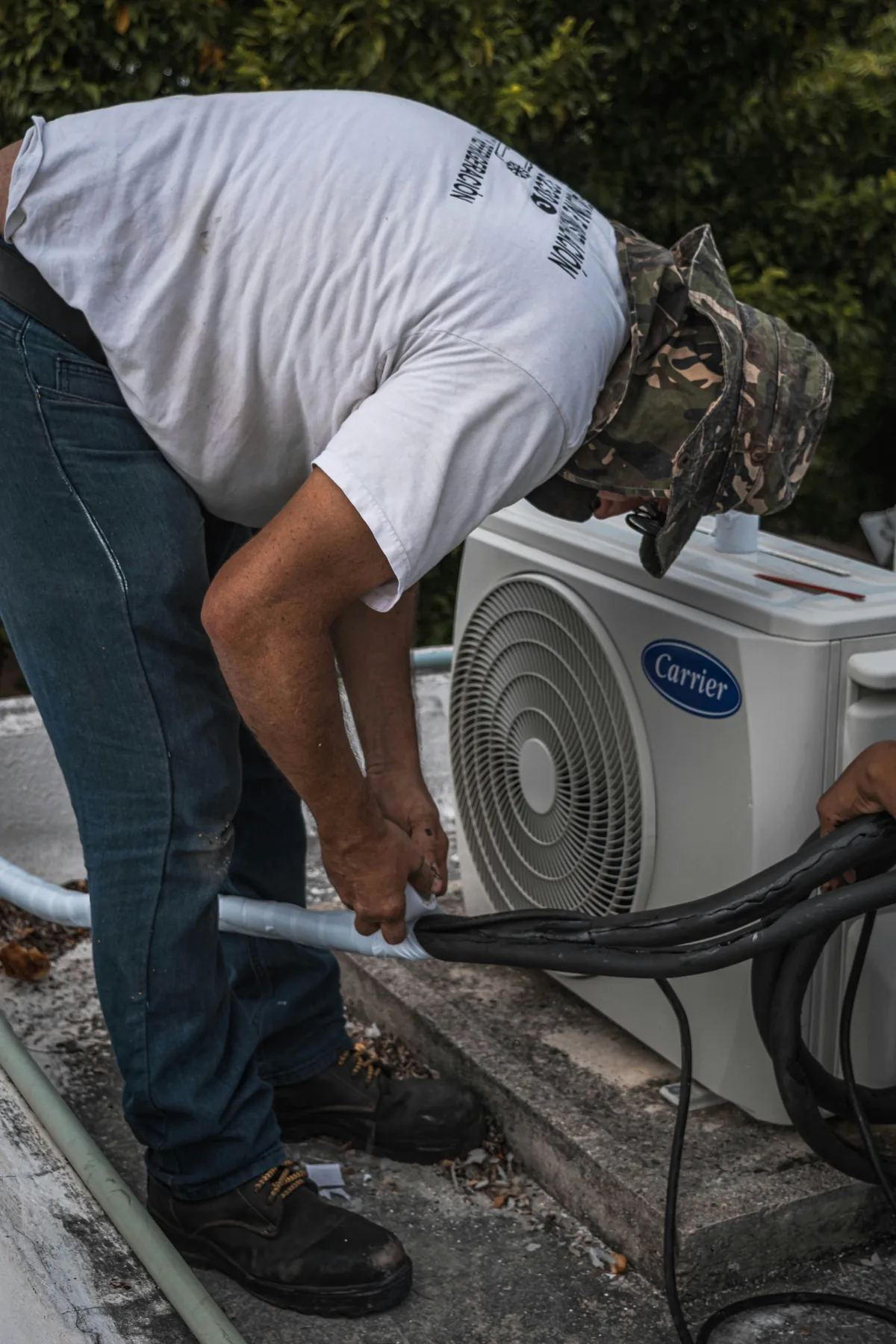
Older R-22 system compressor
Cost range: $3,500 to $5,000+
R-22 was phased out in 2020. Recovered and recycled R-22 stock is still legal but expensive ($100 to $175 per pound). A 3-ton system holds 6 to 10 pounds of refrigerant, so the recharge alone runs $700 to $1,500. Combined with the higher difficulty of finding R-22-compatible compressors (newer ones use R-410A only), the all-in cost climbs fast. Our guide to what Freon costs per pound breaks down current pricing by refrigerant type.
Once you're paying $4,000+ to keep an R-22 system running, full replacement with an R-410A or newer R-454B system almost always pencils out better.
Commercial rooftop unit (RTU) compressor
Cost range: $3,500 to $9,000+
Commercial 5 to 25 ton RTU compressors are larger, often 3-phase electrical, and the install requires lift access on rooftops. Pricing scales with tonnage and accessibility.
What drives the cost up or down
Six factors most affect the bill:
- Compressor type. Single-stage cheapest, two-stage mid, variable-speed most expensive. The compressor type is locked to your existing condenser; you can't swap a single-stage compressor into a unit designed for variable-speed without replacing the controls.
- Tonnage. A 5-ton compressor is roughly 1.5 to 2 times the cost of a 2-ton. Most South Florida residential homes run 3 to 5 tons.
- Brand. OEM compressors for Carrier, Trane, Lennox, Goodman, and Rheem cost more than universal aftermarket units. The OEM compressor is usually worth it for warranty preservation if the unit is under 10 years old.
- Refrigerant type. R-22 is phased out and the refrigerant alone adds $700 to $1,500. R-410A is what most systems in service today run on, while new equipment ships with R-454B or R-32, so replacement compressors for those are still being phased into stock. Our guide to R-454B vs. R-410A explains what that change does and does not mean for a system you already own.
- Warranty status. Major brands cover compressors for 10 years on the parts (with proper registration within 60 days of original install). Labor is usually only covered for 1 to 2 years. A working warranty drops the cost by $1,000 to $2,500 depending on the system.
- Refrigerant recharge. Replacing a compressor always requires recovering and recharging refrigerant. R-410A recharge runs $50 to $100 per pound. A typical 3-ton system holds 6 to 10 pounds.
How to tell the compressor is the actual problem
Compressor failure is one of the most expensive AC repairs, so a correct diagnosis matters before authorizing the work. The clear signs:
- The outdoor unit hums loudly but the fan doesn't spin, or the fan spins without the compressor engaging
- Outdoor unit is hot to the touch (significantly hotter than ambient)
- System trips on the high-pressure or low-pressure safety repeatedly
- Refrigerant pressures are out of spec (your tech measures suction and discharge pressures)
- Indoor airflow is normal but the air coming out is room temperature, not cooled
- The compressor has visible oil leaks at the terminals or service ports
- Burnt-out smell from the outdoor unit
- The contactor is fine, the capacitor is fine, but the compressor draws no current or excessive locked-rotor current on a clamp meter
A reputable HVAC tech confirms compressor failure with at least three independent measurements: refrigerant pressure, electrical current draw, and a continuity test on the windings. If the diagnosis is "the compressor is bad" without specifics, ask for the measurements before authorizing the replacement.
The 5,000 rule: when full system replacement beats compressor replacement
This is the same rule we use across our cost guides (coil replacement, repair-vs-replace, lifespan). Multiply the unit's age by the proposed compressor replacement cost. If the result is over $5,000, replace the whole system instead.
Examples:
- 5-year-old system, $1,800 compressor (under warranty so labor only). Effective cost $400. 5 × 400 = $2,000. Replace the compressor.
- 8-year-old system, $2,400 compressor (warranty just expired). 8 × 2,400 = $19,200. Replace the whole system, especially since the next failure is right around the corner.
- 10-year-old R-22 system, $3,800 compressor + $1,000 refrigerant. 10 × 4,800 = $48,000. Definitely full system replacement.
- 6-year-old system, $1,200 compressor (under warranty, customer pays labor only). 6 × 1,200 = $7,200. Borderline; verify warranty status and consider replacement if you're already planning to upgrade efficiency.
For the deeper repair-vs-replace decision framework, see our existing guide, Should You Repair or Replace Your AC Unit?
What changes the math in Florida specifically
Three Florida factors push compressor replacement decisions toward full replacement more often than the national average:
- Year-round runtime ages the second compressor faster. If you replace the compressor on an 8-year-old Florida system, the new compressor enters a system whose other components (coil, fan motor, control board, contactor) are also at year 8. Cascading failures within 1 to 3 years are common.
- R-22 phase-out makes older systems uneconomical. Any system manufactured before 2010 likely runs R-22. Compressor failure on R-22 plus the current refrigerant pricing usually puts you at $4,000+ all-in. Full replacement with R-410A or R-454B is the better economic call.
- Salt-air corrosion on coastal homes shortens the life of the second compressor too. If the original compressor failed at year 8 because of salt-induced contamination, the replacement compressor enters the same hostile environment. Without coil replacement and salt-resistant coatings, the second compressor often fails by year 11 to 13.
What's worth doing alongside compressor replacement
If you're authorizing the work anyway, three add-ons typically pay back fast:
- Refrigerant filter-drier. Mandatory on most installs anyway, but verify it's in the quote. $40 to $100, prevents debris from re-contaminating the new compressor.
- Coil cleaning. Adds $150 to $250 if not already included. Reduces head pressure on the new compressor and extends its life.
- Surge protection. $100 to $250 install at the outdoor disconnect. Prevents the next lightning strike or grid event from frying the new compressor's start components. Shutting the system down before a storm matters just as much, and our guide on turning your AC off during a hurricane explains the timing.
What's NOT worth doing alongside compressor replacement
A few "while we're in there" upsells that don't usually pencil out unless they're already failing:
- Replacing the entire condensing unit when only the compressor failed
- Replacing the indoor evaporator coil if it's working normally and the system is under 8 years old
- Upgrading the thermostat (do this separately at any time, not as a captive add-on)
- Adding a UV light or air purifier (good products but not related to the compressor issue)
A reputable tech walks you through what's actually needed for the compressor work versus what's an unrelated upgrade.
How to evaluate an AC compressor replacement quote
Six things should appear on a legitimate quote in writing:
- The diagnostic measurements that confirmed compressor failure (pressures, current draw, continuity)
- Whether the unit is under warranty and if so, what the manufacturer is covering
- The make, model, and tonnage of the replacement compressor
- The refrigerant type and amount being recharged, with per-pound pricing
- Itemized labor with hours and hourly rate
- Any add-ons (filter-drier, coil cleaning, surge protection) with separate line items
Red flags:
- Same-day installation pressure without time to compare quotes
- Warranty status not verified before quoting (the contractor should check the registration before recommending parts)
- Cash or check only payment
- Vague "compressor work" line item without make, model, or warranty status
- No measurement-based diagnostic, just "the compressor is bad"
Frequently asked questions
How much does it cost to replace an AC compressor in 2026? $1,500 to $3,500 for a single-stage residential compressor on R-410A, including parts, labor, and refrigerant recharge. Two-stage, variable-speed and older R-22 systems all cost more, and each one is priced by type above.
Is it worth replacing the AC compressor or should I buy a new system? Use the 5,000 rule: multiply the system's age by the proposed compressor replacement cost. If the result is over $5,000, replace the whole system. Most 8+ year old systems with out-of-warranty compressor failures fall on the replacement side of the math, especially R-22 systems and coastal Florida units.
How long does AC compressor replacement take? 5 to 8 hours on site for a residential system, including refrigerant recovery, compressor swap, pressure testing, and refrigerant recharge. Commercial RTU compressors take longer, often 8 to 12 hours, and may require crane or lift access.
Are AC compressors covered under warranty? Most major brand residential compressors carry a 10-year parts warranty if the unit was registered with the manufacturer within 60 days of original installation. Labor is usually only covered for 1 to 2 years. Always verify warranty status before authorizing the replacement.
Why do AC compressors fail in Florida? Top causes: refrigerant overcharge or undercharge from prior service, dirty condenser coil causing head pressure to spike, electrical issues (failed capacitor or contactor stressing the compressor), salt-air contamination on coastal homes, lightning and power surges damaging start components, and end-of-life mechanical wear after years of high runtime.
Can the AC compressor be repaired instead of replaced? Rarely. Compressors are sealed, hermetically welded units. Internal repairs aren't typically possible in the field. Some specific external issues (terminal burn-out, start capacitor failure, contactor issues) can mimic compressor failure and are repairable; that's why the diagnostic matters.
How long does a new AC compressor last in Florida? 8 to 12 years on average, less on coastal homes within a mile of the ocean. The new compressor inherits the rest of your system's age, so a compressor installed in a 10-year-old condenser typically fails by year 14 to 16 of total system life as other components catch up.
What size compressor do I need for my AC? Same tonnage as your existing system. Sizing changes only happen during a full system replacement, when a Manual J load calculation determines whether the original sizing was correct. Replacing only the compressor with a different tonnage will damage your other components.
Florida Breeze HVAC handles AC compressor diagnosis, replacement, and warranty coordination across Miami-Dade, Broward, and Palm Beach. We measure before we recommend (no flat-rate compressor diagnoses), check warranty status before quoting, and walk you through the repair-vs-replace decision honestly. Book a service call or call us at 954-687-8624 for a written quote on your specific unit.
Helpful Resources
$0 Down Financing
No credit needed. Everyone approved.
Start the work now and pay over time.
954-687-8624Related Articles
Explore Our HVAC Services
Serving Miami, Broward, and Palm Beach, ask about our $0 down financing, no credit needed, everyone approved.
Need HVAC Service?
Florida Breeze HVAC serves Miami, Broward, and Palm Beach with fast, professional service.