A single-stage air conditioner is either full-on or off, and it is the right pick when you want reliable cooling at the lowest install price. A variable-speed air conditioner adjusts its output continuously, so it holds a steadier temperature, runs quieter, pulls more moisture out on long runs, and costs more up front. In Miami-Dade, Broward, and Palm Beach counties, where systems run close to year round, those long runtimes are where a variable-speed system earns back part of its price. This single-stage vs variable-speed AC comparison covers how each one runs, what you feel day to day, what breaks, and what each costs, so you can walk into an AC replacement conversation knowing what you want.
Key takeaways
- A single-stage AC has one speed, full blast, so it cools fast and shuts off, which gives you temperature swings.
- A variable-speed AC ramps up and down, so it runs longer at low output, holds the setting within about a degree, and stays quieter.
- Two-stage sits in the middle with a low and a high setting, often the practical compromise for a South Florida home.
- The Southeast region minimum for a split system under 45,000 BTU is 14.3 SEER2 (Seasonal Energy Efficiency Ratio 2), in effect since January 1, 2023 per the U.S. Department of Energy, while ENERGY STAR certification takes at least 17.0 SEER2 under criteria effective January 1, 2025.
- Cost figures here are general estimates that move with size, brand, and the install, not quotes. Get a written, itemized estimate, and leave refrigerant and electrical work to a licensed pro.
How a single-stage AC works and who it fits
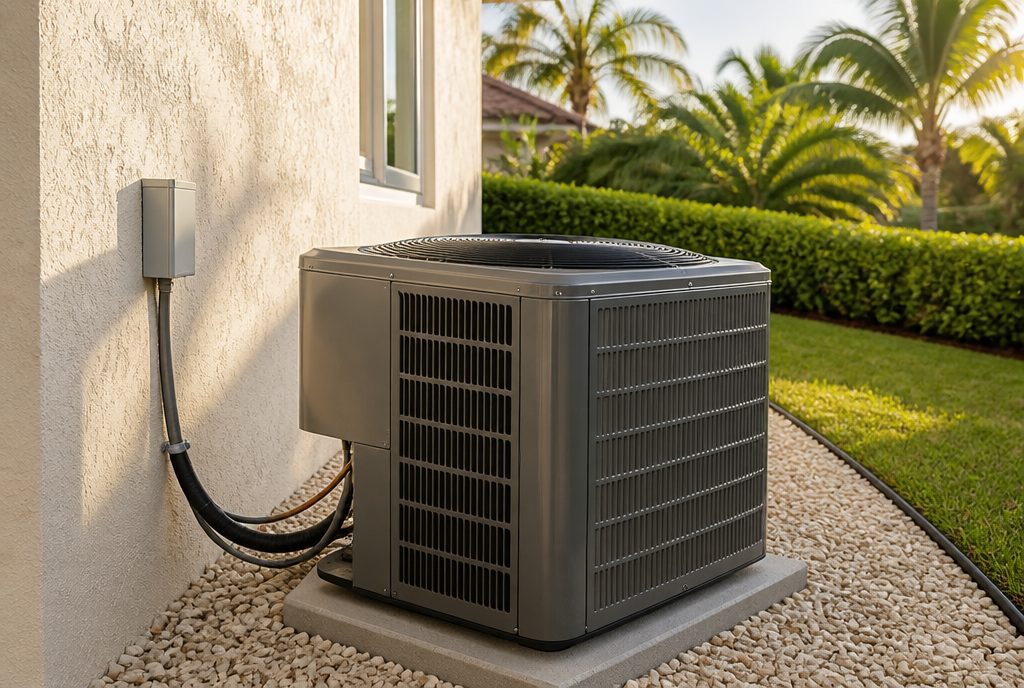
A single-stage air conditioner has one compressor speed: 100 percent. The thermostat calls, the system slams on at full output, drives the house to the set temperature, and shuts off. That cycle repeats all day, which is why single-stage systems are the simplest and most common air conditioners in South Florida homes.
What you feel is that cycle: swings of roughly two to three degrees around the setting, plus the whoosh and outdoor unit noise at every start. Rooms far from the air handler, the back bedroom or the west-facing office, lag behind, because the system never runs long enough to even the house out.
Single-stage fits you if budget decides it, if the house is small or single story with short duct runs, or if it is a rental or a home you plan to sell soon. We still install plenty of them, and a well-sized single-stage unit with clean ductwork cools a Broward home just fine. The trade-off is comfort and running cost, not cooling capacity.
How a variable-speed (and two-stage) AC works and who it fits
A variable-speed air conditioner changes its output continuously, often from about 25 percent to 100 percent of capacity, using an inverter-driven compressor and a variable-speed blower. Instead of blasting and stopping, it settles at the output that matches the heat coming into your house and stays there. Two-stage does a simpler version with two settings: low for most of the day, high for peak afternoon heat.
Long, low-speed running is the point. A system cruising at 40 percent for hours holds the temperature within roughly a degree, moves air gently, and passes indoor air across the cold coil many more times per hour, which is why it dries the air better on long runs. That is a different job than a dedicated dehumidifier does, covered in our dehumidifier vs. your AC guide.
Variable-speed fits you if you are staying in the home, if you have a two-story house or rooms that never match the thermostat, if noise bothers you, or if you want the lowest monthly bill you can buy. Two-stage fits the middle: better comfort and efficiency than single-stage, without the top-tier price or the electronics.

Single-stage vs variable-speed AC: comfort, humidity, noise, and energy use compared
On the things you live with every day, variable-speed wins comfort, quiet, and efficiency, while single-stage wins simplicity and repair cost.
Comfort and even temperatures. The biggest real-world difference. A single-stage system overshoots and undershoots; a variable-speed system holds the number. In two-story Palm Beach County homes, the upstairs-downstairs gap usually narrows on variable-speed equipment, because the blower keeps moving air even when the house barely needs cooling.
Humidity control. Both remove moisture as a side effect of cooling, but variable-speed and two-stage do it better, because moisture removal depends on runtime across a cold coil. A single-stage system that satisfies the thermostat in eight minutes has not run long enough to pull much water out.
Energy use and SEER2. Efficiency is rated in SEER2, the Seasonal Energy Efficiency Ratio 2 standard the U.S. Department of Energy put in effect January 1, 2023, with a 14.3 SEER2 minimum for split systems under 45,000 BTU in the Southeast region. Single-stage usually sits at or near that minimum, two-stage climbs into the mid to high teens, and variable-speed carries the highest ratings sold, past 20 SEER2 on premium models. In a climate that cools nearly year round, that gap compounds fast, and we put numbers on it in is a higher SEER2 AC worth the extra cost.
Noise. A variable-speed system spends most of its life at low speed, so it is quieter at the condenser and at the vents. A single-stage system is only ever at full speed, and every start is a loud one. If a bedroom window faces the outdoor unit, that alone can decide it for you.
Repairs and maintenance. Single-stage is the cheapest to fix: parts are common and a capacitor or contactor is inexpensive. Variable-speed adds an inverter board and controls that cost real money and can take longer to source. Routine AC maintenance is the same on both.
Longevity. Both last a normal service life when installed and maintained right. In coastal Miami-Dade and Broward, salt air is harder on the outdoor unit than the staging technology is, and sizing, a clean install, and regular service decide lifespan.
| What matters | Single-stage | Two-stage | Variable-speed |
|---|---|---|---|
| How it runs | Full output or off | Low stage and high stage | Continuous range, roughly 25 to 100 percent |
| Temperature evenness | Swings of about 2 to 3 degrees | Tighter, roughly 1 to 2 degrees | Tightest, around 1 degree |
| Moisture removal on long runs | Adequate when sized right | Better | Best |
| Typical efficiency | At or near the 14.3 SEER2 regional minimum | Mid to high teens SEER2 | Highest sold, past 20 SEER2 on premium models |
| Noise | Loudest, every cycle starts at full speed | Quieter on low stage | Quietest most of the time |
| Repair complexity | Simplest, common inexpensive parts | Moderate | Inverter boards and controls cost more to replace |
| Install cost | Lowest | Middle | Highest |
What each costs and what drives the price
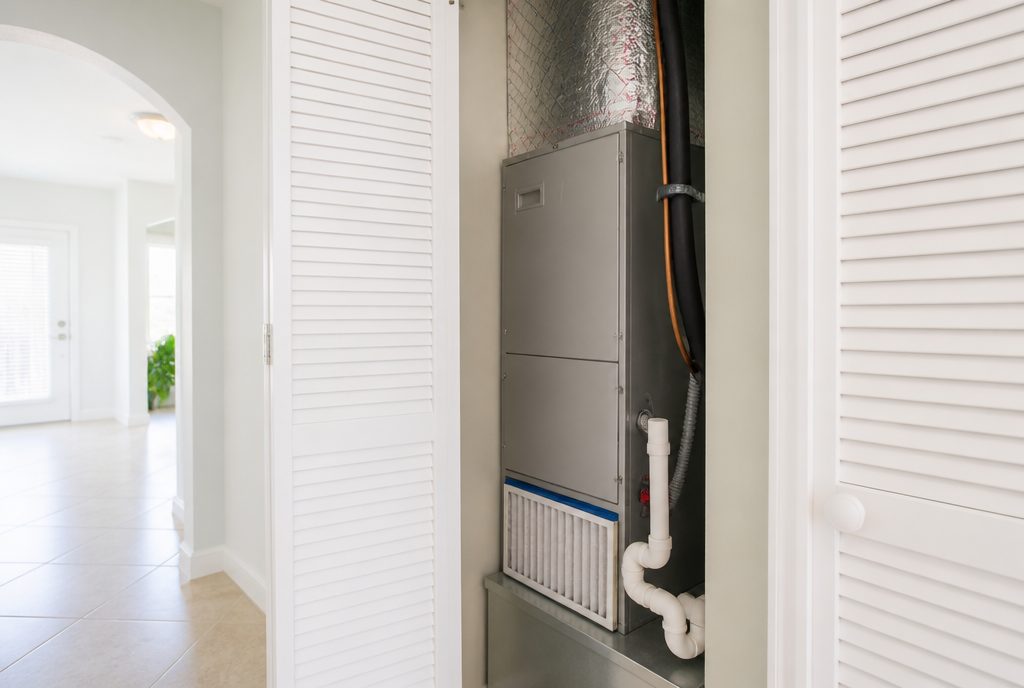
Single-stage is the least expensive to buy and install, two-stage adds a moderate step up, and variable-speed commonly costs several thousand dollars more than a comparable single-stage system of the same capacity. Treat those as general estimates for a South Florida replacement, not prices, because two homes on the same street can land far apart. What moves the number: capacity in tons, brand and model line, whether the air handler and coil are replaced along with the outdoor unit (they should be matched), duct condition, electrical work, permitting, and access. Variable-speed equipment also pairs with a communicating thermostat, which belongs in the quote.
On the other side of the ledger, a higher SEER2 system uses less power every month, and where cooling runs almost the entire year that gap is bigger than national averages suggest. Payback depends on your electric rate, your thermostat habits, and how long you stay. Our Florida AC replacement cost guide breaks down where the money goes, and if you are weighing a fix against a full change, start with repair or replace your AC unit. Do not accept a verbal number. Get a written, itemized quote listing equipment model numbers, labor, electrical, duct work, and permits, then compare like for like.
How to choose for a South Florida home
Choose by how long you are staying and what bothers you today. Five years or less with a tight budget: single-stage. Long term, or you have hot rooms, an upstairs that never matches downstairs, or a noise complaint: variable-speed. Undecided, or you want most of the benefit without the top price: two-stage, where a lot of Miami-Dade and Broward homeowners land.
Two things matter more than the staging you pick. First, sizing: an oversized system of any type short-cycles, leaves rooms clammy, and wears itself out, and oversizing is the most common mistake we find on existing installs. Second, ductwork: leaky or undersized ducts cancel out the comfort you paid for on a variable-speed system, so a duct check belongs in the conversation before you sign. If your home has no ducts, or one problem room, read our ductless mini-split vs. central AC comparison first.
Florida Breeze HVAC is a licensed HVAC contractor (Florida license CAC1823982) serving Miami-Dade, Broward, and Palm Beach counties, and we install, service, and repair single-stage, two-stage, and variable-speed air conditioning systems. The upkeep you can safely handle is short: change the filter on schedule, keep the outdoor unit clear of debris, and watch for weak airflow. Power the system down at the thermostat before touching a filter, and leave anything behind a panel to us, because installation, refrigerant, and electrical work is licensed professional work. For a side-by-side look at both options in your home, Get a Free Evaluation or call 954-687-8624. We measure the load, check your ducts, and hand you a written, itemized estimate before any work starts.
FAQ
Is a variable-speed AC worth it in Florida?
For most homeowners staying long term, yes, because Southeast Florida runs its air conditioning nearly year round and a variable-speed system saves energy on every one of those hours while holding a steadier temperature. If you are selling soon or the budget is tight, single-stage or two-stage is the more sensible buy.
What is the difference between single-stage and two-stage AC?
A single-stage air conditioner has one output level, full capacity, and cycles on and off to hold your setting. A two-stage unit adds a low stage that handles most of the day and jumps to full capacity only in peak heat, which buys longer runs, steadier temperatures, and better efficiency for a smaller price jump than variable-speed.
What are the variable-speed AC pros and cons?
Pros: the steadiest temperatures, the quietest operation, the best moisture removal on long runs, and the highest SEER2 ratings available. Cons: the highest install price, electronics that cost more to replace, and the need for an installer who knows the equipment and commissions it correctly.
Which is the best AC for a Florida home with high electric bills?
Variable-speed equipment carries the highest SEER2 ratings, so it usually delivers the lowest monthly cooling cost, but the savings only show up if the system is sized right and the ducts are sealed. Before you spend the premium, have a contractor check duct leakage and attic insulation, often cheaper fixes with a faster return.
Do I need a special thermostat for a variable-speed AC?
Usually yes. Most variable-speed systems use a matched communicating thermostat from the same manufacturer so the equipment can adjust and report its output. Confirm the thermostat is included in your written quote.
$0 Down Financing
No credit needed. Everyone approved.
Start the work now and pay over time.
954-687-8624Related Articles
Explore Our HVAC Services
Serving Miami, Broward, and Palm Beach, ask about our $0 down financing, no credit needed, everyone approved.
Need HVAC Service?
Florida Breeze HVAC serves Miami, Broward, and Palm Beach with fast, professional service.