If you are asking why is my AC not cooling even though it is clearly running, start with the simple stuff. Nine times out of ten, an AC that runs but blows warm air comes down to one of five easy things: the thermostat is set wrong, the air filter is clogged, a breaker tripped, the vents are blocked, or the outdoor unit is buried in yard debris. Check those first. If none of them fix it, the problem is inside the sealed system or the electrical parts, and that is where you stop and call a licensed technician.
This guide walks the safe checks in order, then tells you exactly when to hand it off. If your AC also keeps shutting itself off or you see water near the indoor unit, jump to our post on a clogged AC drain line, which is one of the most common causes we see in South Florida homes.
Safety first: The checks below are the only ones a homeowner should do. Anything involving refrigerant, the sealed system, wiring, capacitors, or a frozen coil is professional-only. If a fix is not on this short list, turn the system off and call a licensed HVAC technician. When in doubt, hire a pro.
Key takeaways
- An AC that runs but does not cool is usually a thermostat setting, a dirty air filter, a tripped breaker, blocked vents, or a clogged outdoor unit.
- Yes, a dirty air filter can absolutely cause an AC to stop cooling. It is the cheapest and most common fix.
- If the safe checks do not solve it, the likely cause is low refrigerant, a frozen coil, or a failed electrical part, all of which need a licensed technician.
- If you see ice on the copper lines or the indoor coil, turn the system off, let it thaw, and call a pro. Do not keep running it.
- Florida Breeze HVAC offers same-day AC repair and free estimates across Miami-Dade, Broward, and Palm Beach.
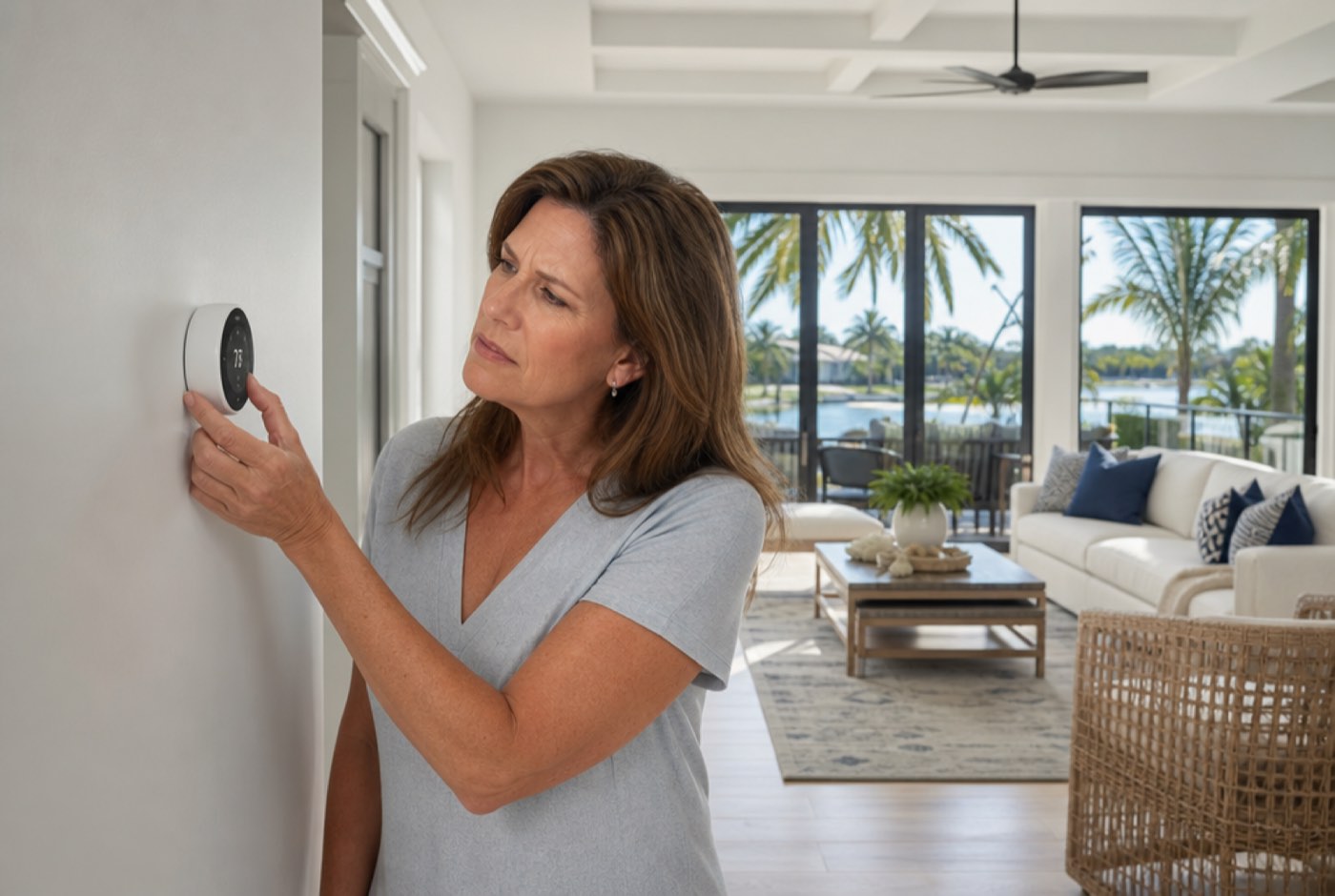
Quick answer: the safe things to check first when your AC runs but will not cool
When your AC runs but will not cool, work through five safe checks in this order before you call anyone. Each one takes a couple of minutes and none of them can hurt you or the system.
- Thermostat. Set to COOL, fan on AUTO, target temperature a few degrees below the room. Swap the batteries if the screen looks weak.
- Air filter. Hold it to the light. If you cannot see through it, replace it.
- Breaker. Check the panel for a tripped AC breaker.
- Vents. Make sure supply and return vents are open and not blocked by furniture or rugs.
- Outdoor unit. Clear leaves and grass away so the condenser can breathe.
If you get to the end of that list and the air is still warm, the cause is something a technician needs to test and repair. Do not open the unit or add refrigerant yourself.
Thermostat, air filter, and breaker: the easy fixes homeowners can do
These three account for most of the "AC running but not cooling" calls that turn out to need no repair at all. Start here.
Set the thermostat correctly
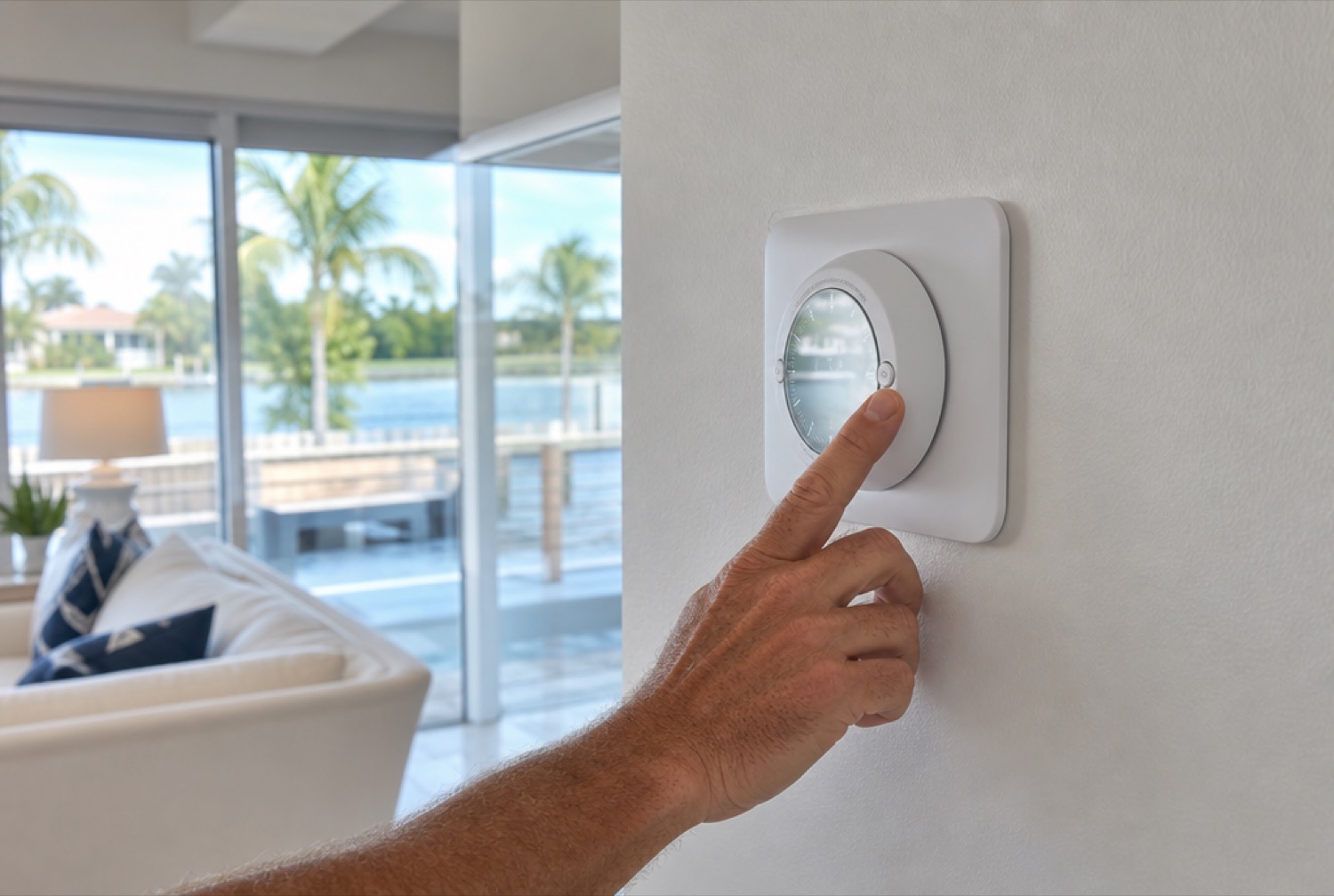
Make sure the thermostat is on COOL, not HEAT or FAN, and the fan is set to AUTO instead of ON. Fan set to ON blows room-temperature air between cooling cycles, which feels exactly like warm air from the vents. Set the target a few degrees below the current room reading. If the display is blank or dim, put in fresh batteries and give it a minute.
Replace a dirty air filter
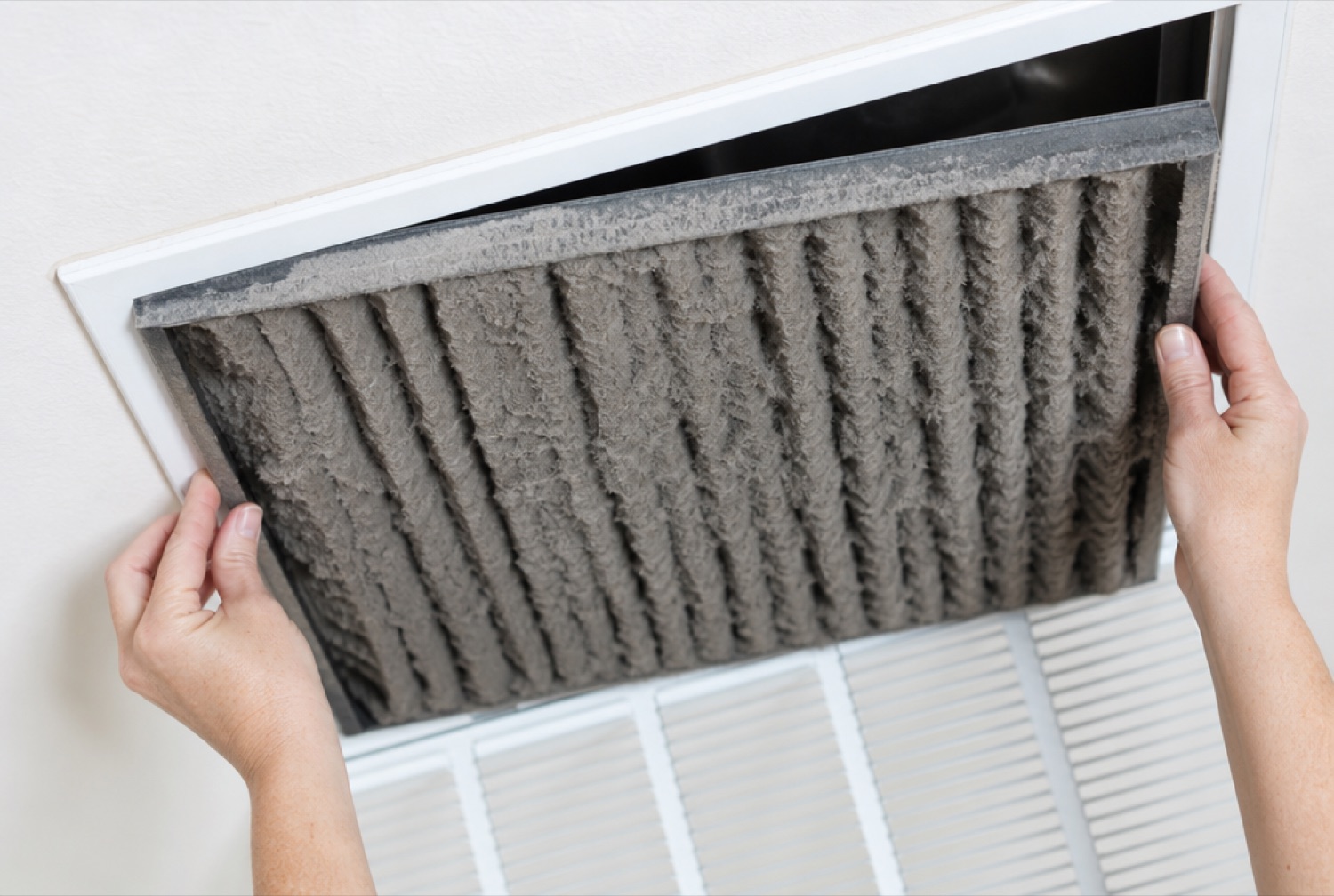
Can a dirty air filter cause an AC not to cool? Yes, and it is the single most common fix we run into. A clogged filter chokes the airflow across the indoor coil, which can drop cooling to almost nothing and, over time, freeze the coil solid. Pull the filter and hold it up to a light. If light does not pass through, put in a clean one. In South Florida, with the system running close to nonstop through summer, plan on a fresh filter every 30 to 45 days, not the 90 days printed on the box.
Check for a tripped breaker
A South Florida AC system usually has two breakers, one for the indoor air handler and one for the outdoor condenser. If the condenser breaker trips, the indoor fan keeps blowing but nothing gets cooled, so the vents feel warm. The same split is what you see when the outdoor unit will not turn on at all. Look at your panel for a breaker sitting in the middle position. You can reset it one time: flip it fully off, then back on. If it trips again right away, stop. A breaker that keeps tripping points to an electrical fault, and that is a job for a licensed technician, not a second reset. If the system quit right after a storm, read our guide on turning your AC off during a hurricane before you touch the breaker at all.
Clogged condensate drain and blocked vents: what to look for, when to stop
A clogged condensate drain and blocked vents are two more homeowner-safe things to rule out before you call. Both are easy to spot and easy to check.
Blocked or closed vents
Walk the house. Every supply vent should be open, and the big return vent should be clear. Rugs, sofas, curtains, and closed doors all choke airflow, and a starved system runs and runs without cooling the space. Reopen anything closed and pull furniture back off the vents.
A clogged condensate drain
Your AC pulls a lot of water out of the air, and that water leaves through a condensate drain line. In Florida heat the line grows algae and clogs, and many systems have a safety float switch that shuts the unit off when the drain backs up. The tells are an AC that cools fine and then quits mid-afternoon, water or a stain near the indoor air handler, or a full drain pan. You can look for standing water and confirm the drain is not overflowing. Clearing the line safely, and knowing when the shutoff has tripped, is covered step by step in our clogged AC drain line guide. If you are not comfortable with it or the unit stays off, that is your cue to call.
Frozen or dirty coils and low refrigerant: why these are a pro's job
If the safe checks did not fix it, the cause is almost always a frozen coil, dirty coils, or low refrigerant, and none of those are do-it-yourself repairs. Here is why, and what to do instead.
A frozen coil. If you see ice on the copper refrigerant lines or on the indoor coil, the only safe move is to turn the system off at the thermostat, let the ice fully melt (this can take a few hours), and call a technician. Our guide on why an AC freezes up walks through the causes and the safe first hour. Running a frozen system can push liquid refrigerant back to the compressor and destroy it. Do not chip at the ice and do not run it to "thaw it faster."
Low refrigerant. Refrigerant does not get used up. If you are low, you have a leak, and topping it off without finding and fixing that leak is throwing money away. Refrigerant is a sealed-system, licensed-only job for a reason. The signs of a low charge are covered in our post on 8 signs your AC is low on refrigerant.
Dirty coils or a failed electrical part. A caked outdoor coil or a worn capacitor can both leave you with an AC that runs but will not cool. A capacitor especially can fail silently and stop the compressor from starting. That is a testing-and-parts job for a technician. If you want to understand the part before the visit, see how an AC capacitor is tested, then leave the actual work to a pro.
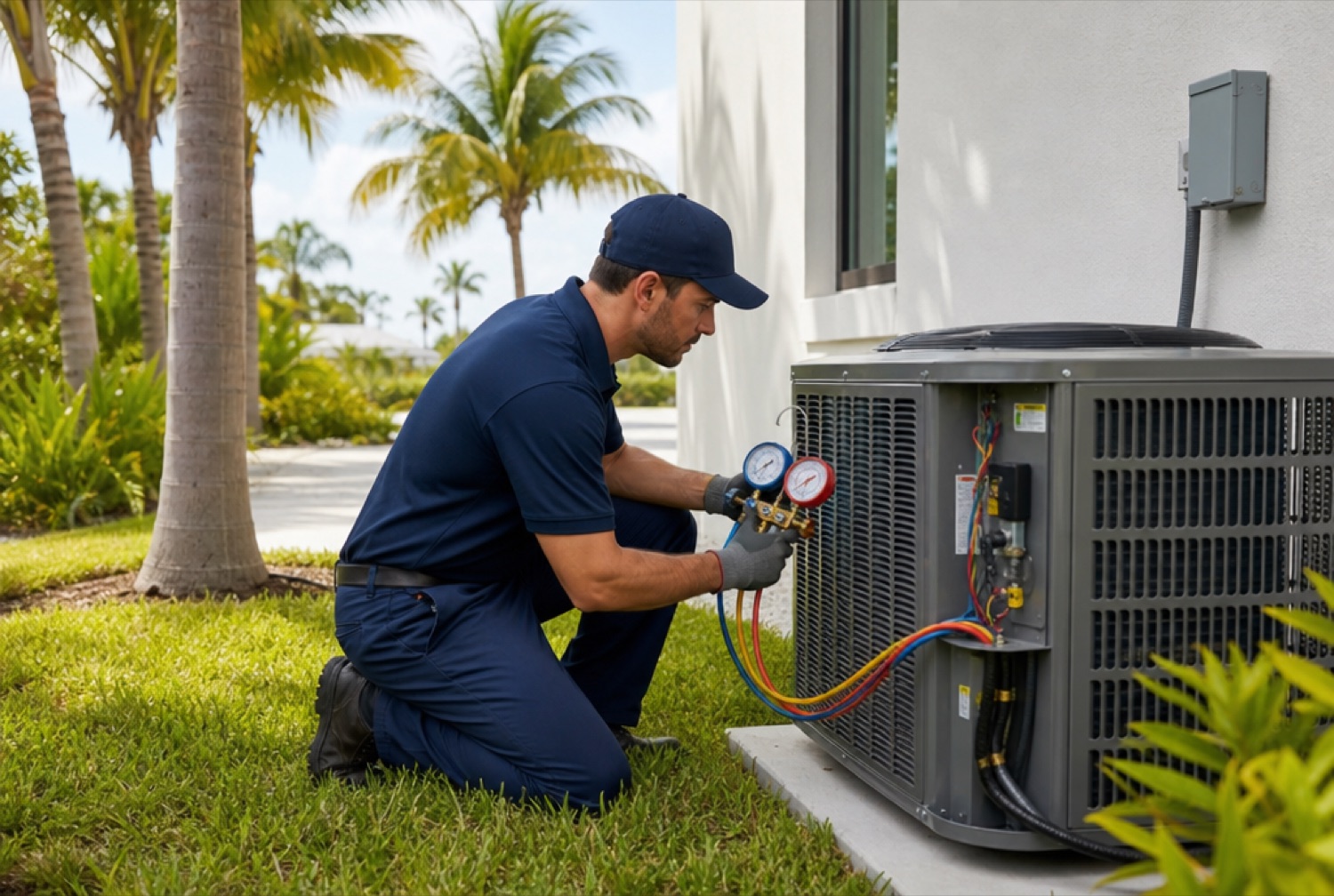
Safe DIY vs. call a pro: a quick guide
Here is the line between what you can safely handle and what needs a licensed technician.
| You can safely do this | Call a licensed pro for this |
|---|---|
| Set the thermostat and change its batteries | Adding or checking refrigerant |
| Replace a dirty air filter | Anything inside the sealed system |
| Reset a tripped breaker once | A breaker that keeps tripping, or any wiring |
| Open and unblock vents | Testing or replacing a capacitor |
| Clear leaves off the outdoor unit | A frozen coil that will not stay thawed |
| Look for water at a clogged drain | Cleaning the indoor or outdoor coils |
When to call a South Florida AC pro right away (and what to expect)
Call a technician right away if you reset a breaker and it trips again, if you see ice on the system, if there is water pooling near the air handler that you cannot clear, or if you have run the safe checks and the vents are still warm. In a South Florida summer, with the outlook favoring above-normal temperatures across the Southeast this season according to NOAA's Climate Prediction Center, a marginal system tends to give out on the hottest afternoon, so it is worth acting early.
Florida Breeze HVAC is a licensed heating and cooling company serving Miami-Dade, Broward, and Palm Beach counties, and AC repair is what we do every day. On a no-cool call, a technician confirms the thermostat and airflow, checks the electrical side and capacitor, reads the refrigerant pressures, and inspects the coils and drain, then gives you a written, itemized quote before any repair. Pricing for a repair varies by the part, the age of the system, and your home, so treat any number you see online as an estimate, not a quote, and get it in writing. For typical ranges on the common repairs, see our AC repair cost guide, and for coil-specific pricing, the AC coil replacement cost page. You can also learn what our AC repair service covers, or see the areas we serve in Miami, Broward, and Palm Beach.
Frequently Asked Questions
Why is my AC running but not cooling?
Most of the time it is a thermostat set wrong, a clogged air filter, a tripped breaker, blocked vents, or a debris-covered outdoor unit. Check those five first. If the air is still warm after that, the cause is usually low refrigerant, a frozen coil, or a failed electrical part, which a licensed technician needs to diagnose.
Can a dirty air filter cause an AC not to cool?
Yes. A clogged filter chokes airflow across the indoor coil, which cuts cooling and can eventually freeze the coil. Replacing the filter is the cheapest and most common fix, and in South Florida you should do it every 30 to 45 days.
Why is my AC blowing warm air?
Warm air from the vents often means the fan is set to ON instead of AUTO, the outdoor condenser lost power at the breaker, or the system is low on refrigerant. Start with the thermostat and breaker, and if those are fine, have a technician check the refrigerant and compressor.
What should I do when my AC is not cooling?
Run the five safe checks: thermostat, air filter, breaker, vents, and outdoor unit. If none of them fix it, or you see ice or standing water, turn the system off and call a licensed HVAC technician. Do not open the sealed system or add refrigerant yourself.
Is it safe to keep running my AC if it is not cooling?
Not if you see ice on the lines or coil, because that can damage the compressor. Turn it off, let it thaw, and call a pro. If there is no ice, a short run is fine while you work through the safe checks.
Florida Breeze HVAC handles no-cool calls across Miami-Dade, Broward, and Palm Beach with same-day service. If the safe checks did not do it, book a free estimate or call us at 954-687-8624 and we will get your home cool again.
$0 Down Financing
No credit needed. Everyone approved.
Start the work now and pay over time.
954-687-8624Related Articles
Explore Our HVAC Services
Serving Miami, Broward, and Palm Beach, ask about our $0 down financing, no credit needed, everyone approved.
Need HVAC Service?
Florida Breeze HVAC serves Miami, Broward, and Palm Beach with fast, professional service.